
Biomass fuel gives manufacturing facilities a renewable thermal energy option by using surplus agricultural residues and timber processing off-cuts that would otherwise be discarded or burned openly in fields.
From agro-residue to factory steam
01
Collection
Residues such as mustard husk, groundnut shells and sawmill sawdust are gathered from regional aggregators.
02
Processing
De-stoning, magnetic metal screening, pulverization and low-temperature flash drying.
03
Densification
High-pressure densification into standardized pellets and solid bio-coal briquettes.
04
Clean combustion
Burned in industrial boilers, thermic fluid heaters and kilns to generate steam and process heat.
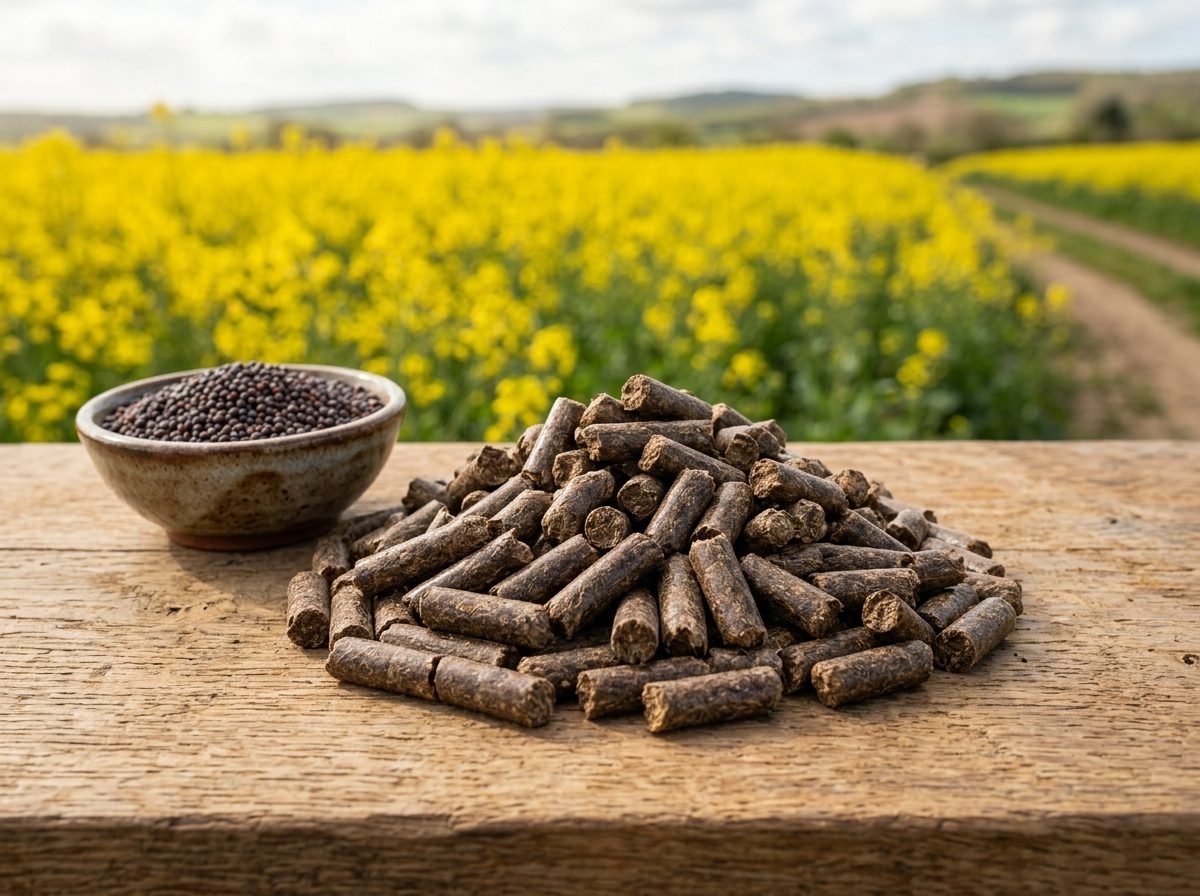
What is biomass fuel?
Biomass fuel is solid organic matter derived from plants and agricultural crops, used as a thermal energy source. Unlike fossil fuels formed over millions of years, biomass recycles carbon within short biological cycles.
Industrial thermal generation is a large part of manufacturing operating expense. Moving to solid biomass reduces reliance on imported fossil fuels such as petcoke and coal, lowers exposure to international commodity volatility and supports domestic agricultural economies.
Agricultural residue utilization
Open-field burning of post-harvest residue is a seasonal air-quality challenge in northern and western India. Aggregating mustard husk, groundnut shells and agro stalks for pellet and briquette manufacturing gives farmers an economic incentive and redirects useful energy to industrial boilers.
Responsible biomass sourcing
We use secondary agricultural residues and processed timber sawmill off-cuts. We do not fell trees or compete with food-crop production. Our sourcing emphasizes seasonal regional availability and long-term arrangements with farm aggregators.
Pellets and briquettes: energy density
Loose agricultural waste has very low bulk density, which makes it uneconomical to transport beyond a short distance. Densification raises bulk density substantially, so biomass fuel can travel hundreds of kilometres in full truckloads and fit standard storage and feeding systems.